

Do Plantation Shutters Add Home Resale Value?
Most window treatments are a decorating expense that leaves with you or gets replaced by whoever buys the house. Shutters behave differently — they are mounted to the structure, they convey with the property, and the warranty follows the address rather than the owner. Here is what that is actually worth, without the inflated ROI figures.
Fixtures Versus Furnishings
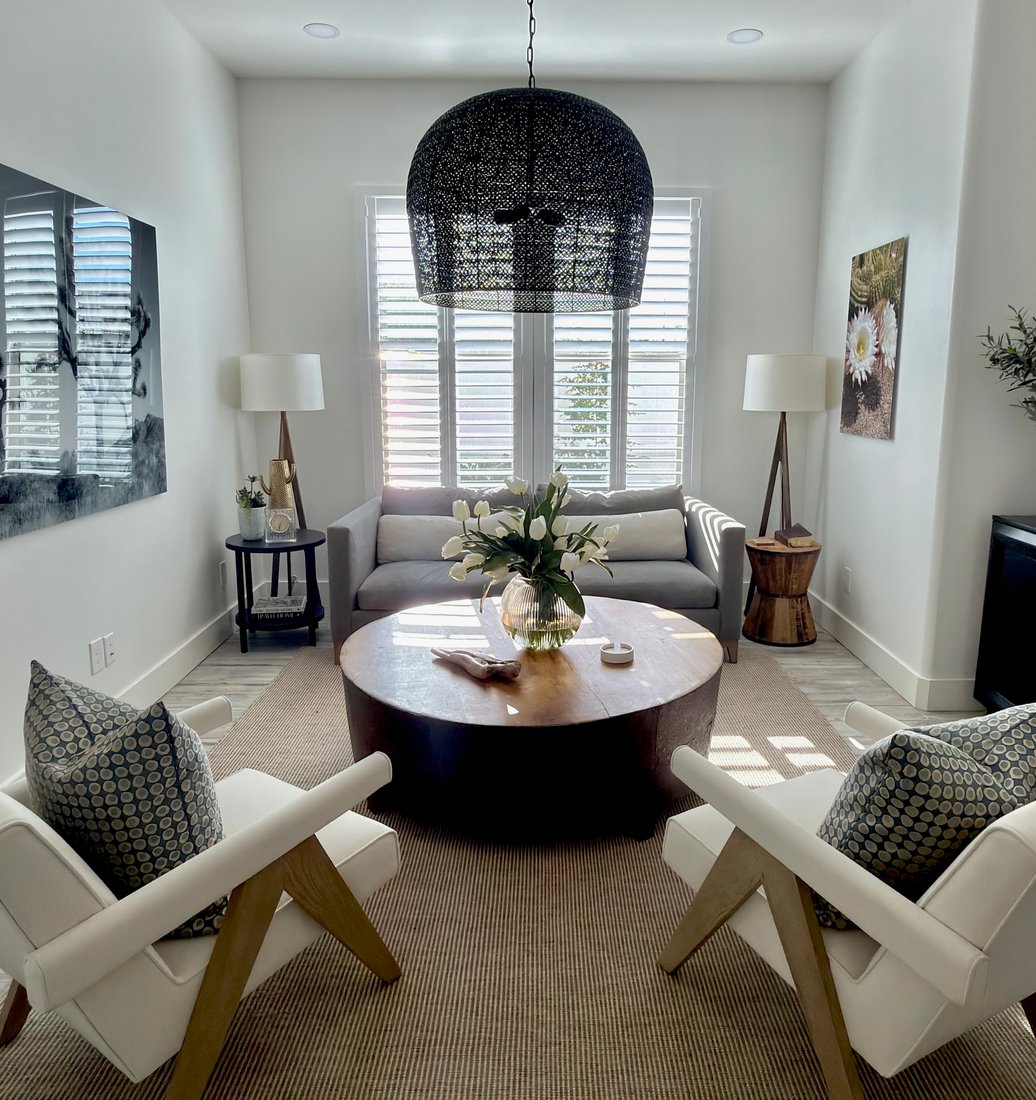
This is the whole distinction, and it is why shutters come up in resale conversations when roman shades do not. A treatment that hangs on a rod is a furnishing — buyers assume it may leave, and if it stays they often replace it anyway because it reflects the seller's taste. Shutters are mounted to the window frame. They are normally treated as fixtures and convey with the property, the same way built-in cabinetry or a ceiling fan does.
Practically, that changes how a buyer reads the room. A shuttered window is part of the house they are buying. A window with a fabric shade is a window they will be shopping for later.
We are not going to quote you a recouped-cost percentage. Numbers like that get repeated confidently across the internet and almost none of them are grounded in anything specific to your market or your house. What we can say plainly is which properties of shutters buyers respond to, and why they hold up better than most upgrades.
Four Reasons Buyers React Well to Shutters
The house reads as finished
Buyers walking three similar homes in a day notice the one where nothing is left to do. Bare windows, bent builder blinds, and mismatched treatments all register as items on a list. Consistent shutters register as complete.
They do not date the way fabric does
A shutter is an architectural element, not a pattern. Valances, swags, and trend-driven fabrics can make a room read as a specific decade. Louvered panels in white have looked appropriate for a very long time.
The warranty transfers
Norman®'s lifetime manufacturer coverage on many products, plus the 10-year no-questions-asked replacement on specific models, passes to the next owner. Being able to hand a buyer transferable coverage on a permanent feature is unusual.
They answer the Phoenix summer question
Cooling cost is on every Arizona buyer's mind. Shutters on the sun-facing elevation are visible evidence it has been handled — homeowners commonly report roughly 30% lower cooling costs after shuttering that side of the house.
How Shutters Compare to Other Window Treatments at Resale
| Conveys with the house | Typical lifespan in AZ | Buyer perception | |
|---|---|---|---|
| Plantation shutters | Yes — mounted fixture | Decades; lifetime warranty on many Norman® products | Part of the house |
| Blinds | Usually | A few years — slats bend, cords fail, vinyl bakes | Replaceable |
| Roller / cellular shades | Usually | Several years; fabric fades and holds dust | Replaceable |
| Drapery | Often removed or negotiated | Varies; strongly style-dependent | Seller's taste |
The Choices That Protect Resale Value
If resale is part of why you are doing this, a few specification decisions matter more than the rest.
Go white or soft off-white
Whites read as architectural. Norman® offers a deep range of them — Pure White, Silk White, Decorator's White, Pearl — and they behave very differently against different trim, which is why we bring samples to hold against your actual millwork. Stained wood tones can be beautiful with the right interior, but they are a taste decision, and taste decisions narrow the pool of buyers who fall in love with the room.
Choose 3½" unless the window says otherwise
It is the most popular louver size because it suits the widest range of window proportions and reads as neither dated nor trend-chasing. The exception is a large view window, where 4½" keeps the glass as uninterrupted as possible — a real selling feature in Carefree, Fountain Hills, and hillside Scottsdale homes where the view is the point.
Do the whole house, or a complete zone
Consistency is what makes a house feel finished. Shutters in three rooms and bent builder blinds in four reads as an abandoned project, which is worse for a walkthrough than blinds throughout. A whole-home installation is both the best value per opening and the version that actually changes how the house shows.
Do not cheap out on the core
A warped, chalked, or sagging shutter is worse at resale than no shutter, because now it is a defect rather than an absence. This is the specific failure mode of hollow vinyl in Arizona, and it is why we only install a solid-core product — see what heat does to the cheaper materials.
If You Are Staying Put
Most of our customers are not selling next year, and the resale argument is a secondary reason for them rather than the main one. Worth saying plainly: the value you get from shutters while you live in the house — a cooler west side in July, floors and furniture that are not fading, dust that wipes off instead of settling in, and a genuinely quieter room — is the return most people actually notice. Resale is the part you get later on top of it.
If you want to know what a project on your house would run, start with what drives shutter pricing in Phoenix, or how buying direct changes the number.
Resale Value FAQs
Do plantation shutters add value to a home?
They are one of the few window treatments buyers consistently treat as part of the house rather than as something the seller will take with them. They are permanently mounted, they read as a finished architectural detail rather than a decorating choice, and the Norman® warranty transfers to the new owner. We would not promise a specific dollar return — no honest company can, because it depends on your market and your home — but in a market where buyers compare several similar houses, shuttered windows read as finished and bare or dated ones read as a to-do list.
Do shutters stay with the house when I sell?
Yes. Because they are mounted to the window frame they are normally treated as fixtures and convey with the property, the same way built-in cabinetry does. Drapery and hardware are far more often negotiated or removed. If you ever intend to take them, that has to be written into the contract explicitly — but they are custom-built to your openings and will not fit another house.
Does the warranty transfer to the buyer?
Yes. Norman® provides a lifetime manufacturer warranty on many products and a 10-year no-questions-asked replacement on specific models for accidental breakage, and that coverage transfers to a subsequent homeowner. It is a genuinely useful thing to be able to hand a buyer, and worth mentioning in your listing.
What color is safest for resale?
White or a soft off-white. Norman® offers a deep range — Pure White, Silk White, Decorator's White, Pearl — and the right one depends on your trim. Whites are the safest because they read as architectural rather than as a decorating decision a buyer would want to undo. Stained wood tones are beautiful with the right interior but narrow the pool of buyers who will love them.
Which louver size is best if I might sell?
3½" is the most popular size for a reason — it suits the widest range of window proportions and reads as neither dated nor trend-chasing. 4½" is the right call on large view windows where you want the glass as uninterrupted as possible. 2½" suits smaller cottage-scale openings.
Is it worth shuttering the whole house before listing?
If you are doing it, doing it completely is what makes the difference. Three shuttered rooms and four with bent builder blinds reads as a half-finished project. A consistent treatment through every sightline is what makes a house feel finished on a walkthrough — and a whole-home install is also the best value per opening.
Do buyers in Phoenix specifically care about shutters?
Buyers here are highly aware of what summer costs to cool, and shutters are visible evidence that the sun-facing side of the house has been dealt with. Homeowners commonly report roughly 30% lower cooling costs after shuttering the sun-facing elevation. That is a much more concrete pitch to a Phoenix buyer than a decorative upgrade.
Planning to Sell, or Planning to Stay?
Either way the specification is worth getting right the first time. Kurt comes to your home with samples, measures every opening, and gives you an honest read on what makes sense for your house. Free, about an hour, no obligation.